
Arizona's Hundred-Year Answer to a Thirsty Future
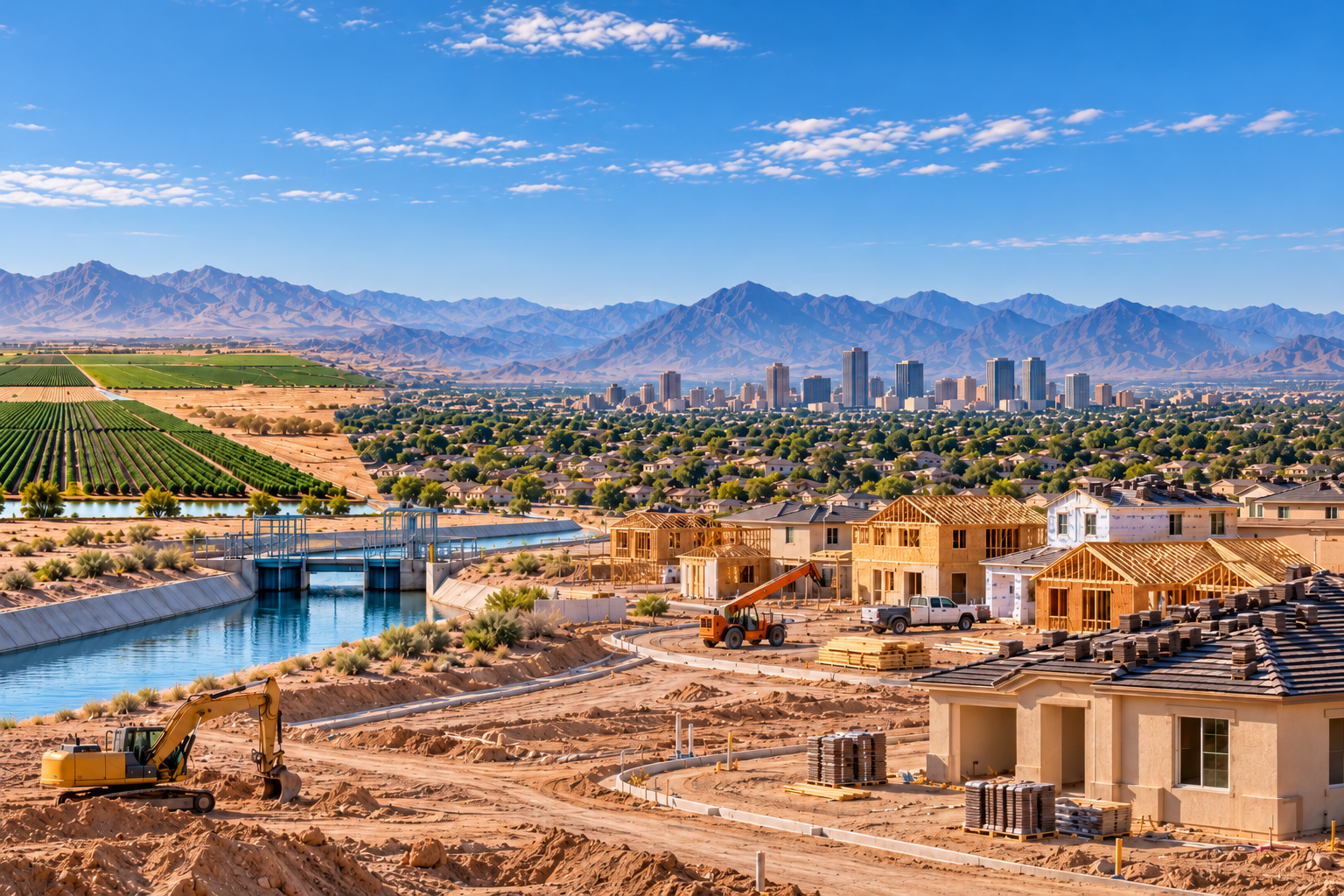
It’s fair to ask whether it’s wise to buy a home in Arizona when the state's apparently running out of water. With the Colorado River in the headlines so often, it's a common refrain. But surprisingly, according to the Arizona Department of Water Resources, the state uses less water today than it did in 1957, when only a fraction of today's population lived here. This is predominantly due to farms, which still use about 72% of the state's water, but have cut back by farming fewer acres and using methods like laser-leveled fields that spread irrigation water more evenly.
The Phoenix area doesn't depend on any single water source, drawing from groundwater, the Colorado River, the Salt and Verde rivers, and recycled water. The Greater Phoenix Economic Council reports that the Colorado River supplies 29% of the metro’s water, and that more than 89% of the area’s wastewater gets cleaned and reused for parks, schools, and golf courses.
Since 1980, the Arizona Department of Water Resources has required Phoenix-area builders to prove a new neighborhood has a hundred years of water before they can sell a single home. That means showing the water will last through drought, is safe to drink, and has a provider with the proper infrastructure committed to delivering it. If any piece falls short, the community doesn't get approved. This is one of the reasons why I'm bullish on new construction here, since a brand-new home comes with the water question settled on paper before anyone pounds a nail.
In 2023, the state applied that rule to pause new groundwater-only communities in parts of the Phoenix area, hitting Buckeye and Queen Creek hardest, and many took the pause as proof that Arizona is running dry. I see it as evidence of the system doing its job, catching a problem before a single home got built. Homebuilders have since won two court rulings against the state’s water rules, including one finding it skipped required steps when it created the standards behind that pause. The state has said it plans to appeal, but neighborhoods already approved aren’t affected, which explains why Buckeye is still seeing plenty of construction.
Many of the Valley's newest neighborhoods are going up on old farmland. When Arizona's water law passed in 1980, farms that were already irrigating were allowed to keep pumping groundwater, and they've continued to pump. A 2025 law signed by Gov. Katie Hobbs with bipartisan support lets homebuilders buy farmland, retire its pumping right for good, and receive a smaller water credit in its place, so the new neighborhood runs on only a portion of the water the farm used. The first approval under the program went to Heritage West in Buckeye, and according to the governor's office, its 825 homes will use over 437 million fewer gallons a year than the farmland did, an 80% cut. When a field turns into a neighborhood, the land's water use drops.
If you're shopping for new construction, the water answer is already in your documents. Arizona requires builders to hand every buyer a public report on the subdivision before they sign, and it spells out who supplies the community's water and its approval status. Most resale homes are served by an established city water provider that's already covered for its whole area, and anyone who wants to confirm a provider's status can find the list on the Arizona Department of Water Resources website or call the department at (602) 771-8599. The public report is a long, dry document most people skim. I already have access to these reports, so when I'm working with a new-build buyer, I pull one early and walk them through the water section in plain English before they commit to anything.
This post was drafted with AI assistance. It has been reviewed, fact checked, and edited by me before publishing. All analysis and anything with a point of view is mine, and any opinions expressed are not those of eXp Realty or the Legacy Real Estate Team. –Ethan Wolvek
Sources
Arizona Department of Water Resources, Water in the West, Part 1
Arizona Farm Bureau, Fill Your Plate, Arizona Water Use Facts, citing ADWR
Greater Phoenix Economic Council, October 2025 Water Messaging
Arizona's Family, Gov. Hobbs announces pause for new home builds that rely on groundwater
Courthouse News, Arizona approves Ag-to-Urban water conservation plan
Arizona PBS, Agriculture to Urban bill focused on increasing Arizona's housing supply
AZ Big Media, Arizona water concerns and how to avert crisis