
Windowless Giants Rising in the Valley
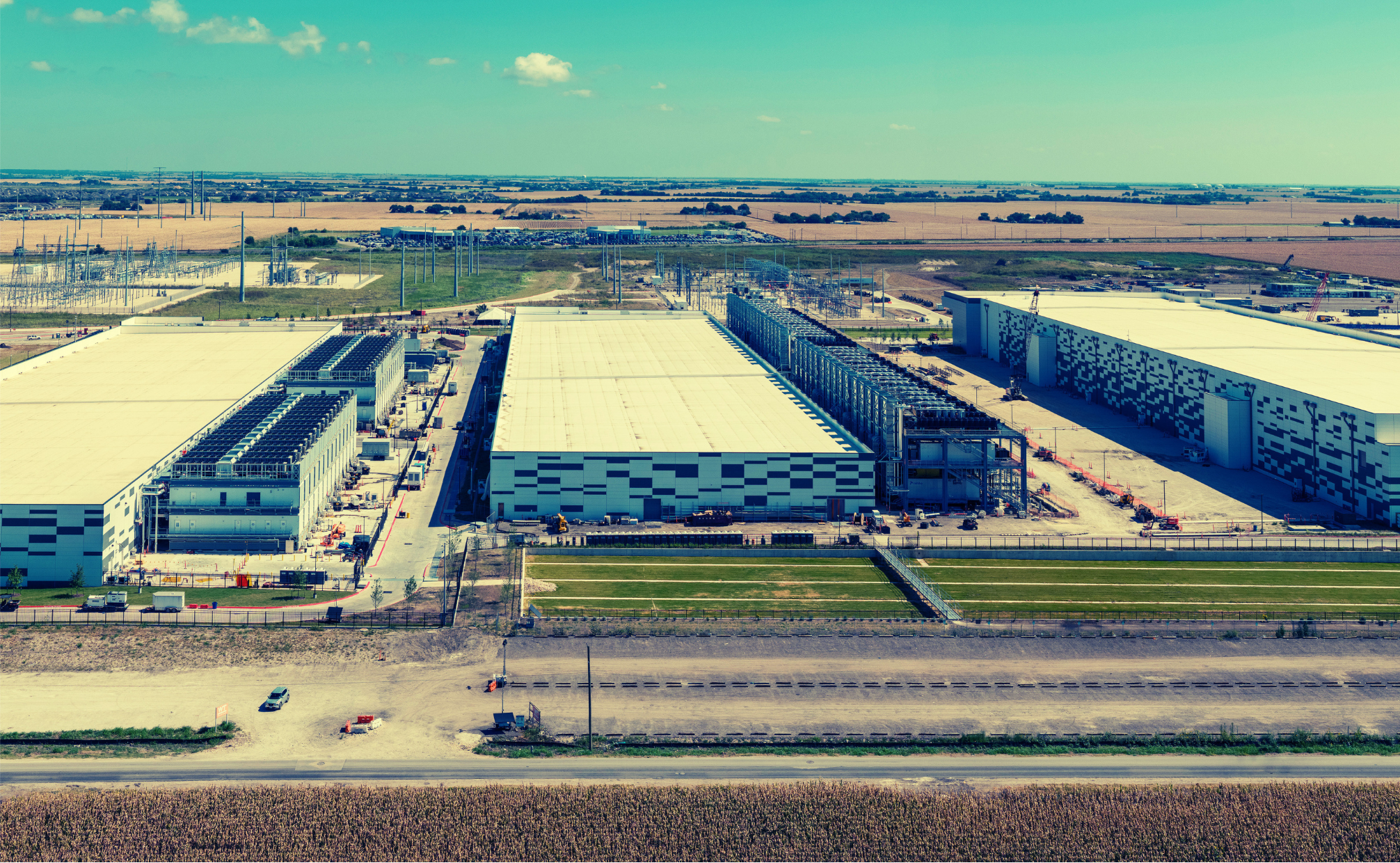
Data centers are going up across the Phoenix metro, and some Valley homeowners have watched at least one rise near them without a clear sense of what it is. These buildings are gigantic, mostly windowless, and quiet, which tends to invite mystery. For example, Meta’s data center campus in Mesa is planned to span more than 2.5 million square feet (57 acres) across five buildings.
Put plainly, a data center is a building housing banks of computer servers that store the data that supports much of our everyday digital life, from streaming media, online banking, to the AI tools increasingly built into devices, appliances, everyday apps, and search engines. The servers run around the clock, and their continuous operation shapes almost everything else about the building, from how much power it draws to how it handles heat.
A data center's defining trait is a large, constant appetite for electricity. A single large campus can draw as much power as a small city, and that load doesn't rise and fall much through the day the way household demand does. Because the servers need steady, uninterrupted power, a data center usually arrives with its own electrical infrastructure, including power substations, transformers, and transmission lines connected directly to the grid, all of it sized for a facility that never powers down. Those are the pieces a neighbor is most likely to notice.
Nuclear power is an emerging option companies are exploring to meet all this power demand. Small modular reactors, like those found on a submarine or aircraft carrier are being developed. APS, SRP, and Tucson Electric are studying possible sites for new nuclear generation, weighing both large conventional reactors like Palo Verde and the smaller modular ones. A preferred site could be chosen in the late 2020s, with new power potentially coming online in the early 2040s. It's a direction the industry is heading, not a current reality.
Water tends to draw the most questions, in a state that actively manages its supply. Servers throw off constant heat, and one common way to remove it is evaporative cooling. If you've ever run a swamp cooler, you already know the principle. Water evaporates, and as it does it carries the heat away with it. The scale is far bigger, but the idea is the same, and the water gets used up in the process rather than recirculated.
The reliable numbers come from the operators themselves. Microsoft has reported using more than 125 million liters of water per year at a single data center, and says it's piloting a closed-loop, zero-water-evaporation cooling design at its facilities under construction in Phoenix, with those sites expected to come online in late 2027. Microsoft has said it will only build zero-water data centers in Arizona going forward.
The wider picture in Arizona hasn't so far matched the early concern. Researchers at Arizona State University studying data center water use note that the state is approaching roughly 200 data centers and chip factories without a major jump in overall water consumption, partly because operators have moved away from evaporative cooling. Arizona's assured water supply rules also require Phoenix-area municipalities to ensure a 100-year water supply before approving any new development.
A data center is a large capital investment, and that shows up on the local tax rolls. The buildings, land, and equipment add to the property tax base without having to build further civic infrastructure.
Arizona has also reduced the taxes these facilities pay. Under the state's Computer Data Center program, created in 2013 and administered by the Arizona Commerce Authority, certified data centers are exempt from sales and use taxes on qualifying equipment for up to ten years, or twenty for designated sustainable projects. The exemption applies to sales and use tax on equipment. Property tax on the buildings and land still applies. In 2026 the state paused that exemption. Under a new law, the Arizona Commerce Authority stopped accepting new applications for it between July 1, 2026 and June 30, 2029.
Once a data center is running, it employs relatively few people. Meta says its Mesa campus drew an average of about 2,000 skilled trade workers at peak construction, then settled into more than 200 permanent operational jobs once complete and online. A chip fabrication plant, on the other hand, is a long-term employer with a large permanent workforce and a supplier network around it. TSMC says its first three Arizona fabs will eventually create about 6,000 direct jobs, plus tens of thousands of construction and supplier jobs, and the Greater Phoenix Economic Council estimates roughly $1.4 billion in tax revenue to Arizona over more than a decade.
More are coming. The Valley has the land, the infrastructure and the political will for them, so those enormous windowless buildings are likely to become a more familiar part of the landscape. But they don’t have to remain mysterious. Long before the walls go up, planning documents and utility filings can reveal how big they’ll be, how much power they’ll draw and where their water will come from.