
Phoenix’s Agricultural Past Shapes Its Present Neighborhoods
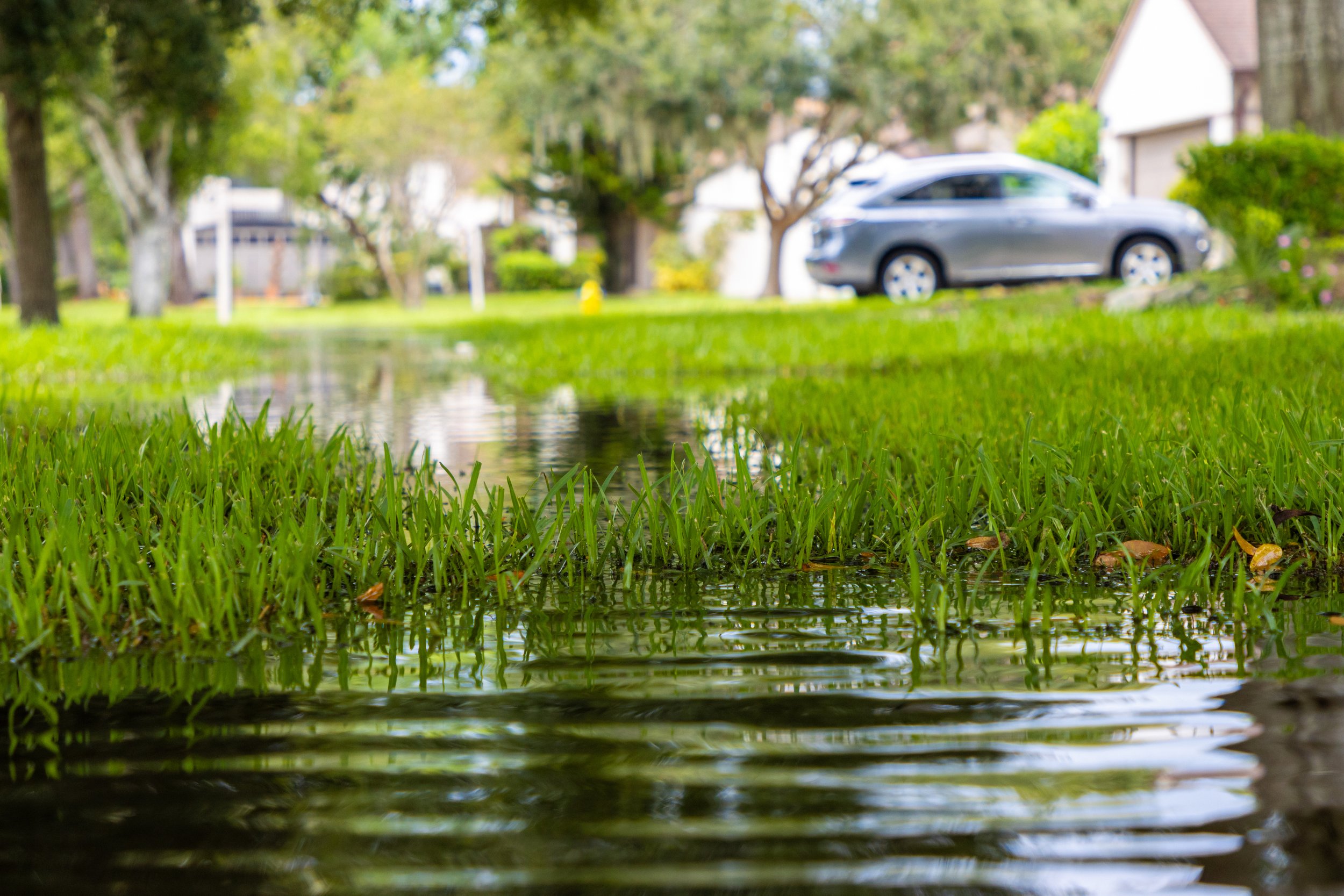
A friend and I were driving shelter dogs to Starbucks for pup cups the other week, and somewhere in Arcadia I noticed lawns that made no sense. We passed rows of suburban homes fronted by yards so lush they looked out of place in this parched metro. Each lawn sat under a few inches of standing water, held in by a low dirt berm. I pointed and said, “What the–?” My friend, who's a native Phoenician, gave me that patient look she saves for her four-year-old. “It's flood irrigation, left over from when this was all citrus groves.”
Citrus groves? Turns out almost nobody outside these neighborhoods knew this either.
Apparently, flood irrigation is about as literal as it sounds. Water runs on a set schedule from the canals to a gate at the high corner of a neighborhood, then through private ditches that fill each yard a few inches deep and let it soak in." According to the Salt River Project, which delivers the water, this untreated canal water moves by gravity, and the deep soak means these yards need watering far less often than a sprinkler system would provide.
The practice goes back to the Valley's farming years. Early farmers and ranchers pledged their land to help fund the construction of Roosevelt Dam in the early 1900s, and the water rights attached to that land stayed tied to the land itself under law. So as the old farms got carved into neighborhoods, the water came with the dirt. Most homeowners stopped flooding their yards over the years, which is why it's down to a small slice of Valley homes now, roughly 20,000 to 25,000 across the metro, according to SRP and a 2025 Arizona State University study.
That's also why these blocks look the way they do. A deep periodic soak supports mature trees and real lawns in a metro that's largely moved to xeriscaping. SRP points to the shade itself as part of the value, since a tree canopy lowers temperatures on the street and can cut both water and electricity demand for the homes underneath it.
The water itself is cheap. It's untreated, and the system that delivers it was paid for generations ago. The result is raw water delivered at a fraction of what treated city water runs for the same green lawn.
The catch is in the work and the coordination. Your neighborhood's rotational turn comes up on SRP's schedule, roughly every two weeks in summer and every four in winter, with a dry-up stretch each year when no water is delivered at all. The delivery window can fall at any hour, day or night, so on delivery day, you or one of your neighbors has to be out there to open and close the gate.
The ditches themselves are private, owned and maintained by the homeowners they serve. A lot of neighborhoods share that upkeep through an irrigation water delivery district. It's really just the neighbors on the ditch splitting the cost, with trustees they elect to run it. Older ditches can get expensive to repair, and SRP currently runs a pilot program that helps eligible neighborhoods fund those fixes.
The water rights generally convey with the property, so if you purchase a home in an irrigation water delivery district, you'd be taking on both the benefit and the responsibilities: the schedule, the gate, your share of the ditch, and any district assessment, which varies from one neighborhood to the next. Confirm those responsibilities with SRP, the irrigation district, or the city before you take them on. .
As for where irrigation water districts still exist, the Arcadia corridor along the Arizona Canal is the best-known example, former citrus orchards subdivided in the 1950s into ranch homes on large lots that kept their trees. Mesa and Gilbert both still have active flood-irrigated neighborhoods, confirmed in that 2025 ASU study. Tempe runs its own urban irrigation service to around 850 residential customers. In central and south Phoenix, pockets of older neighborhoods still flood-irrigate too, including streets off Central Avenue, where SRP has been revitalizing the old canals.
Residential flood irrigation is one of those features hiding in plain sight around the Valley. If you're weighing a home that has it, it's worth understanding exactly what conveys with the property before you fall in love with the greenery.
This piece draws on figures from Salt River Project, the City of Tempe, the Arizona Municipal Water Users Association, and a 2025 Arizona State University study.